
While Facebook is and remains the largest social media platform in the world, keeping millions of users happy by itself is not enough in 2026. Facebook has been clearly dominant in terms of reach, as it currently has 3.15 billion users monthly active users – but it is losing its customers’ loyalty. In 2026, just 29% of users agree to give Facebook their personal data, at a lower rate than 2020, when there were 41%. To that radical decline in trust has come a sincere effort to find Facebook alternatives focused on users, and not on advertisers.
Reasons are mounting: all the ads on the streaming interface, algorithm-driven feeds crowding out the posts of it’s friends, data privacy scandals, and an ever more marketplace-like platform. In fact, 34% of its users temporarily deleted the Facebook application at some point in their mobile devices – the highest rate recorded ever. People need spaces in which they feel they are in control.
Whether you want a more private platform, a robust community, or enhanced features for your business, this guide is for you. From privacy options to better platforms for enterprises, this guide covers the 12 best options when looking for Facebook alternatives in 2026. There’s a platform for anything you need, from decentralized platforms such as Mastodon to professional platforms such as LinkedIn.
Why People Are Leaving Facebook (Real Reasons in 2026)
The Facebook exodus isn’t simply a technological trend, it’s a sign of the real frustration at Facebook. To date, 50% of users in some age groups would simply prefer to use other platforms entirely, and 68% of Gen Z Users want to feel concerns about data tracking and surveillance on Facebook.
- Privacy Erosion: In 2026, only 29% of users feel that Facebook respects their privacy, enticing millions to choose alternative platforms instead.
- Overload of ads: You will find it difficult spotting the posts of your true friends and relatives due to the clutter of ads in Facebook application.
- Algorithmic manipulation: Facebook will show you what it thinks is most appropriate; sometimes fake posts are shown where there are real posts.
- Misinformation Fatigue: The 20 to 30% of users who report leaving, do so due to the frustration caused by bots, fake news and too much irrelevant content.
- Platform irrelevance: When it comes to 35-44 year olds, 49% state they have no need for Facebook in their lives.
How We Evaluated These Facebook Alternatives
The selection of a Facebook alternative will come down to your top priorities: privacy, community or business tools. After sifting through dozens of platforms, we’ve only selected the 12 best platforms for 2026 based on the same set of criteria. If you rely on any of the six platforms you use an average person relies on, just consider all the platforms you’re using each month – 6.7, to be exact.
- Privacy & data policy: We checked if the platform sells user data, runs targeted ads and shares information with a third party.
- Community features: Groups, forums, channels and moderation tools were evaluated across community platforms to look at their support for real community building.
- Business tools: Advertising options, dashboards and tools that enable brands to grow and convert audiences.
- User base and activity: Numbers are not useful, at least as much as the size of a platform to which people are active.
- Easy to use: If you need to migrate to Facebook, then don’t make it a computer science degree. We focused on platforms that were easy to make use of for frequent users.
Table: Facebook Alternatives – Full Feature Comparison
| Name | Privacy Rating | Groups/Community | Business Tools | User Base | Best For |
| MeWe | 5 | Yes – Groups | Basic | 20M+ | Privacy seekers |
| Mastodon | 5 | Yes – Servers | None | 12M+ (Fediverse) | Decentralized fans |
| Discord | 4 | Yes – Servers | Limited | 150M+ | Communities |
| 3 | Yes – Groups | Advanced | 1B+ | Professionals | |
| 3 | Yes – Subreddits | Basic | 1.5B+ visits/mo | Niche topics | |
| Telegram | 4 | Yes – Channels | Basic | 900M+ | Messaging & groups |
| Nextdoor | 4 | Yes – Local | Local ads | 45M+ | Local communities |
| Minds | 5 | Yes – Groups | Basic | 6M+ | Free speech |
| Bluesky | 4 | Yes – Feeds | None | 30M+ | Twitter alternative |
| Vero | 4 | Limited | Basic | 5M+ | Creatives |
| Signal | 5 | Yes – Groups | None | 40M+ | Private messaging |
| Diaspora* | 5 | Yes – Pods | None | 700K+ | Open source fans |
12 Best Facebook Alternatives Reviewed 2026
1. MeWe
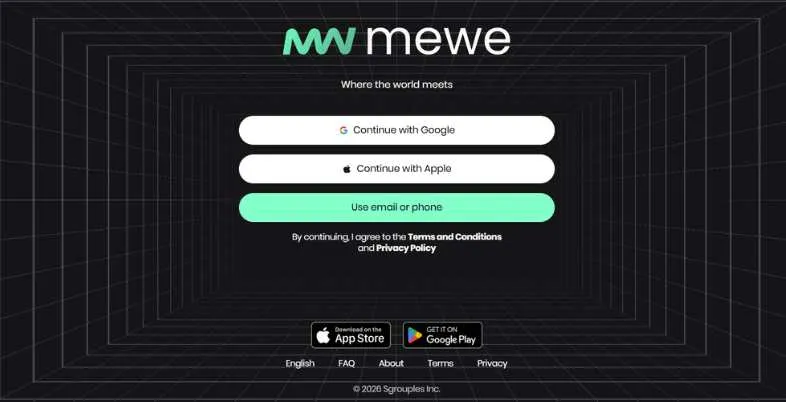
MeWe is a social media app like Facebook, but with privacy limits. MeWe was established in 2016 when founder Ella Gray observed that users were not in full control of their data, there are no ads, tracking, or algorithm manipulation. It emulates the popular layout of Facebook: groups, timelines, pages, and messaging – which makes switching smooth. As privacy has become a concern, people have been moving away from mainstream platforms and MeWe has successfully spread to above 20 million registered users in 2026. It finds particular interest among users who desire a Facebook experience without the data sacrifices involved with the Facebook ecosystem.
Key Features:
- No ads or tracking
- Groups & pages
- Private messaging
- 8 GB free storage
- Disappearing content
Pros:
- Strong privacy focus
- Facebook-like layout
- No data selling
Cons:
- Smaller user base
- Limited business tools
- Less viral content
Pricing: $30 USD per month
Best For: Privacy seekers
Website: https://mewe.com/
Suggested Read: All SMO Tools
2. Mastodon
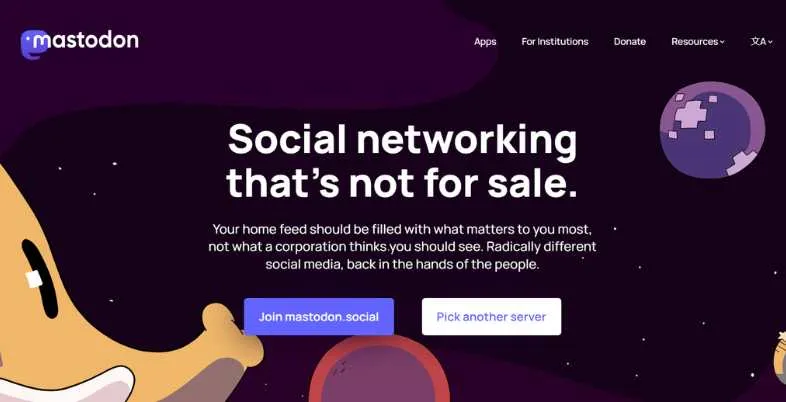
Mastodon is a free and open-source decentralized social network that empowers users. It was launched in 2017, and is run on independently run servers known as “instances”, with their own set of community rules. No one entity owns or monetises your data. Mastodon is one of the rising stars in social media with the broader Fediverse topping 12 million users within two years of 2026. They receive an unfamaged feed without ads or algorithmic manipulation, it is chronological. It comes in 93 languages and it is free to use – it is one of the truly open alternatives to Facebook today.
Key Features:
- Decentralized servers
- No ads or algorithms
- Chronological feed
- Open-source code
- Cross-platform support
Pros:
- Full data ownership
- No corporate control
- Active communities
Cons:
- Steep learning curve
- No business tools
- Fragmented network
Pricing: Starting at $6/month
Best For: Tech users
Website: https://joinmastodon.org/
3. Discord
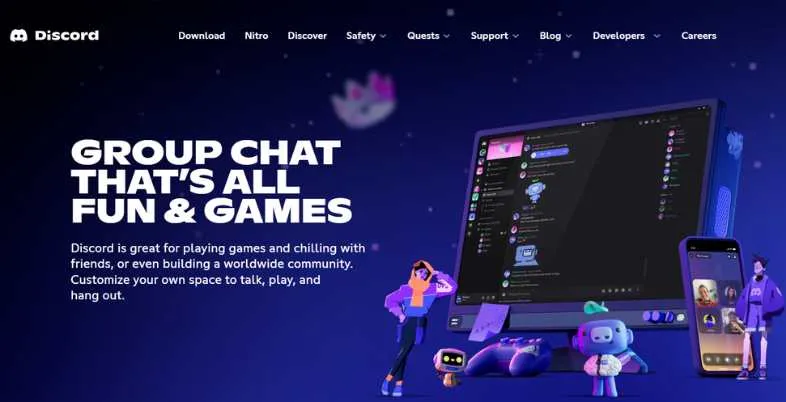
Initially, Discord was a game-chat website, yet it has turned into one of the most influential instruments for community-building in 2026. It has a total of 150 million active users per month, where you can chat, voice and video inside topic-organized servers. Discord enables creators, brands, educators and fans to build vibrant communities of users. Best alternative to Facebook for those who are not looking to follow a public social feed, but rather live group interaction. With a ton of bots and role management, Discordly running a massive community is actually relatively easy, and that’s all in a free-to-use platform.
Key Features:
- Voice & video chat
- Community servers
- Role management
- Bot integrations
- Screen sharing
Pros:
- Great community tools
- Free to use
- Very active platform
Cons:
- Not a social feed
- Hard to discover content
- Limited for businesses
Pricing: Free to use
Best For: Communities
Website: https://discord.com/
4. LinkedIn
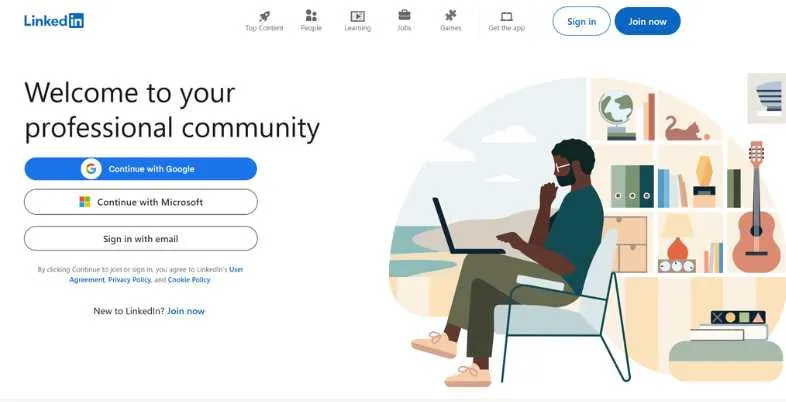
In the year 2026, LinkedIn will be the world’s foremost professional app more than 1 billion users. It is a job and business website, but it pays crucial role as an alternative of facebook for profession networking, pages of companies, trade groups, and thought-leadership site. In addition to providing valuable business features such as ads, analytics, job postings and lead generation. B2B brands, entrepreneurs, freelancers and job-seekers can all find a narrow focus, high-intent audience on LinkedIn that can’t be replicated on Facebook professionally. It continues to be the one that’s preferred for career-focused content and business networking.
Key Features:
- Professional network
- Company pages
- Job postings
- LinkedIn Ads
- Industry groups
Pros:
- Huge user base
- Strong business tools
- High-quality leads
Cons:
- Heavy ad presence
- Not for casual users
- Premium is costly
Pricing: Free; around ₹1,850 per month
Best For: Professionals
Website: https://in.linkedin.com/
5. Reddit
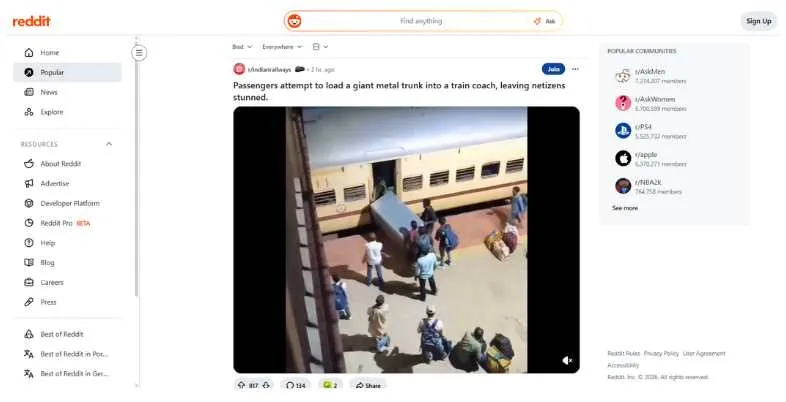
By 2026, Reddit has surpassed its users to count over a billion monthly visits. Reddit’s theme is divided into hundreds of subreddits, ranging from tech to cooking to mental health. This serves as a good and effective facebook alternatives for developing conversations, news and real user evaluations concerning your community. Reddit’s up-voting system brings up the best content, and hence the content sounds more genuine than what can be found in Facebook’s algorithm-driven feed. Brands and businesses use Reddit as well for community engagement, AMAs (Ask Me Anything) and niche advertising making it a versatile platform across different use cases.
Key Features:
- Subreddit communities
- Upvote/downvote system
- AMA threads
- Community awards
- Reddit Ads
Pros:
- Huge topic variety
- Authentic discussions
- Strong communities
Cons:
- Anonymous culture
- Hard to brand build
- Can be toxic
Pricing: Free; $166.00 to $169.00
Best For: Niche communities
Website: https://www.reddit.com/
6. Telegram

The Telegram messaging application journeyed an epic path until it eventually turned into a huge social media in 2026, having more than 900 million monthly active users. It is one of the most capable broadcasting and large community managing facebook alternatives through its Groups (with a maximum of up to 200,000 members) and Channels (with unlimited subscribers). It supports end-to-end encryption with Secret Chats, file sharing up to 2 GB and bots for automation. Telegram Channels have become a platform for direct content distribution for many creators, businesses, and media outlets, and are particularly favored for community-building and private conversations.
Key Features:
- Groups up to 200K
- Unlimited channels
- Secret chats (E2E)
- File sharing 2 GB
- Bots & automation
Pros:
- Huge group sizes
- Strong privacy options
- Very fast messaging
Cons:
- Not a social feed
- Moderation issues
- Less business reach
Pricing: Free; $1.19 per month
Best For: Large groups
Website: https://web.telegram.org/
7. Nextdoor
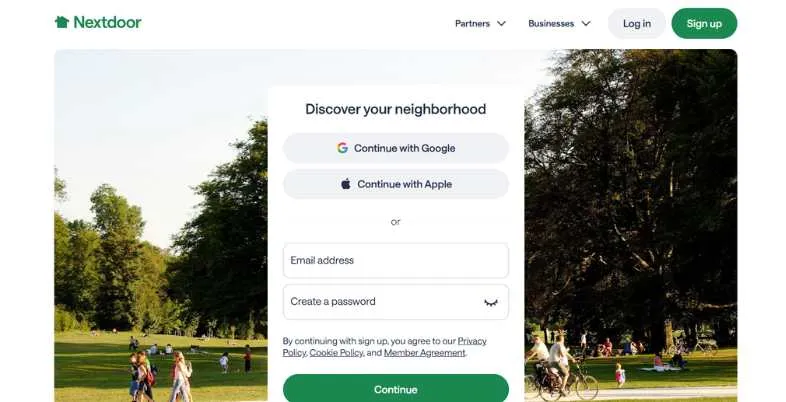
Nextdoor is a hyperlocal social network connecting neighbours and local communities together. It’s one of the most unique facebook alternatives for local engagement – having been used in more than 45 million users in 11 countries in 2026. Everyone is able to post updates regarding vistas, local tips and tricks, lost pets and community events. Nextdoor is a great local platform for local businesses to advertise and to reach a very geotargeted audience. It is especially favored by people who wish for authentic local input instead of a worldwide social stream, whether it’s homeowners, local service providers or community groups.
Key Features:
- Neighborhood feeds
- Local business pages
- Community alerts
- Event sharing
- Local ads
Pros:
- Hyperlocal focus
- Trusted community
- Good for local business
Cons:
- Limited to local area
- Slower growth
- Not for global reach
Pricing: Free
Best For: Local communities
Website: https://nextdoor.com/
8. Minds
Minds is a free and open-source, blockchain social media platform that supports freedom of expression and transparency of data. It was launched in the year 2015 and offers users tokens to boost their posts and contribute to other users’ effort. Minds is open to anyone who can’t stand the lack of freedom that exists on many commercial platforms, and desires greater transparency regarding the use of their data; it was estimated that 6 million people will be using Minds by 2026. Minds is a new alternative to facebook which includes groups, a news feed, video, blogs, and messaging with none of the advertising or selling of data to advertisers. It’s an increasingly popular slogan for independent creators with its decentralized philosophy.
Key Features:
- Token rewards system
- Open-source platform
- No data selling
- Boosted posts
- Encrypted messaging
Pros:
- Earn from content
- No censorship policy
- Transparent platform
Cons:
- Niche user base
- Can attract extremists
- Limited mainstream appeal
Pricing: $50 per month
Best For: Free speech advocates
Website: https://www.minds.com/
9. Bluesky
Bluesky builds on the AT Protocol, with Twitter co-founder Jack Dorsey originally backing its establishment, to become a decentralized social network. Bluesky is connected with over 30 million users as it attracts Twitter/X users seeking a fresh, less noisy environment. It’s simple, text-based, and ordered by the time of its creation – sort of like early Twitter. It serves as a facebook replacement for public conversations, news sharing and following interesting people rather than for community formation. Bluesky is one of the most fresh Facebook alternatives of 2026 and gives individuals their very own web servers, control of their information, and is ad-free.
Key Features:
- AT Protocol decentralized
- Chronological feed
- Custom feeds
- No ads
- Open-source
Pros:
- Ad-free experience
- Clean interface
- Growing fast
Cons:
- Small user base
- No business tools
- Text-heavy only
Pricing: free to use
Best For: Twitter alternative
Website: https://bsky.app/
10. Vero
Vero is a subscription-based social media platform where users can share without algorithms or ads and without being afraid to provide a bad impression. It was introduced in 2015 and improved through 2026 and allows users to post photos, music, videos, books, links and places in a stream that is clean and chronological. It is for artists, photographers, film makers, and creatives who find themselves disillusioned with Instagram and Facebook’s focus on promoting algorithm-driven posts over valuable posts. Vero, with approximately 5 million users, is one of the less mainstream facebook alternatives, but it has a well-engaged and passionate community. It has a model of privacy that doesn’t sell, target, or sell your data.
Key Features:
- Chronological feed
- No ads or algorithms
- Multi-format sharing
- Subscription model
- No data selling
Pros:
- Beautiful design
- Great for creatives
- No ad interruptions
Cons:
- Small user base
- Paid for full features
- Limited community tools
Pricing: Starter $54/month
Best For: Creatives & artists
Website: https://vero.co/
11. Signal
Sending messages privately is the most better and trusted application to use on Signal and that’s why people have come up with an alternative to Facebook, which is just called Signal. Signal is a full end-to-end encrypted, open-source, and ad-free tool with more than 40 million monthly active users which is sponsored by a non-profit foundation. There’s no public social feed, but all of Signal’s group messaging, voice calls, video calls and Stories capabilities make it perfect for private community communication. If you’re looking to use a platform free from ads and data tracking – there’s no better alternative to Signal than it was back in 2010. It is increasingly gaining popularity among journalists, activists and privacy-conscious world citizens.
Key Features:
- End-to-end encryption
- Group messaging
- Voice & video calls
- Disappearing messages
- No data collection
Pros:
- Best-in-class privacy
- Free and open-source
- No ads ever
Cons:
- No public social feed
- Smaller groups only
- No business tools
Pricing: Free to use
Best For: Private messaging
Website: https://signal.org/
12. Diaspora
Around 700,000 people are using Diaspora, which is one of the smaller facebook alternatives, and is popular in the open-source, privacy conscious community for its intent to, in a good sense, be a social network. Diaspora lets users post, share photos, add tags or aspects (which are customisable sets of user contacts), and can do so with other Fediverse platforms. Setting up can get a bit technical, but can be a true escape from corporate social media.
Key Features:
- Decentralized pods
- Data ownership
- Aspect-based sharing
- Open-source code
- Fediverse compatible
Pros:
- Full data ownership
- No corporate control
- Free and open-source
Cons:
- Very small user base
- Dated interface
- Technical setup needed
Pricing: Free, starting around ₹499
Best For: Open-source users
Website: https://diasporafoundation.org/
Comparison Table: Facebook vs Alternatives
| Feature | MeWe | Mastodon | Discord | ||
| Privacy | Low | Very High | Very High | High | Medium |
| Ads | Heavy | None | None | Minimal | Heavy |
| Algorithm Feed | Yes | No | No | No | Yes |
| Groups/Community | Yes | Yes | Yes (Servers) | Yes (Servers) | Yes |
| Business Tools | Advanced | Basic | None | Limited | Advanced |
| Data Selling | Yes | No | No | No | Limited |
| Free Plan | Yes | Yes | Yes | Yes | Yes |
| Decentralized | No | No | Yes | No | No |
| Mobile App | Yes | Yes | Yes | Yes | Yes |
| Monthly Active Users | 3.15B | 20M+ | 12M+ (Fediverse) | 150M+ | 1B+ |
Best Facebook Alternative by Use Case
Not all the fb alternatives are capable of the same objectives – and that’s to the way you determine which one is the right one for you. With the average person using 6.7 social platforms daily for an average of 2:23 an hour, the best course of action in 2026 is to match the goals of each social platform to a particular app.
In the case of privacy-conscious users, MeWe and Signal stand above the rest, with both platforms emphasizing that they do not have any data selling policy and no data ad targeting. Discord and Reddit take the top spot for niche groups and community builders, having provided the infrastructure of their own servers and subreddit feature to millions of active and loyal users. If you’re a business or a B2B brand, then LinkedIn is the obvious choice with its 1 billion+ users and advanced business tools.
With local connection, Nextdoor’s approximately 45 million users add some hyper local value that Facebook Groups can only match to an extent. For creators and freethinkers, sites such as Mastodon, Bluesky and Minds provide platforms where content goes where it will, without algorithms or advertising.
Decentralized Social Media: Is It the Future?
The movement of decentralized social media is a thing that cannot be ignored anymore, it can be seen as a new giant competitor to facebook. Combined, the Fediverse platforms (Mastodon, Pixelfed and PeerTube) have more than 12 million users as of January 2026. A bad figure considering the 3.15 billion Meta already has, but the increase is steady with ass often wane with centralized platforms.
Decentralized platforms are unique because of the model. No single organisation owns you, no advertising machine barks at you, and no algorithm determines what to show you. No-one selects paid advertising as an affiliate marketing channel, and Mastodon receive no traffic from paid advertising – each of its users has come via an organic path.
There is also the push by Bluesky to add support for AT Protocol and the not-so-fully integrated Fediverse partial support by Threads. Not only is user-owned social media on the rise, but 2026 is when it is on the horizon of taking off in reality with challenges – while there are issues to tackle around usability and moderation with decentralized facebook alternatives, there is a clear sense of direction of travel.
Conclusion
Facebook doesn’t seem like it’s going anywhere – 3.15 billion people tell me that’s not happening. However, in 2026, the number one is no longer the number one. Only 29% of users trust the site with their data, so it’s more important than ever to find real facebook alternative and more rewarding. There’s a platform on this list created for your needs, whether you’re a privacy advocate, a community builder, small business or a creative professional.
MeWe is safe and secure due to its data protections. With Discord, you construct your community. A LinkedIn profile enhances your profession. With Mastodon, you are free. The right facebook substitute is really the one that will placed you back into control. Begin with one, play with some and take back your social media usage on your own terms.
Explore More:
FAQs
What is the best Facebook alternative for privacy?
As of writing this, the best privacy focused facebook alternatives are MeWe and Signal. Both platforms gather no user information, show no ads, and never sell personal data to advertisers, or third parties for advertising purposes.
Which Facebook alternative is best for building an online community?
Discord currently has plus 150 million active users per month and is the most popular platform for communities. For special interest subject areas, Reddit is great too, with 1.5 billion+ monthly visits to thousands of sub-areas ranging across the world.
Are there Facebook alternatives that are good for business?
Yes. With sophisticated ad, analytics and lead generation, which is the best facebook alternative for business? LinkedIn is the top. Nextdoor is great for local businesses that have small budgets for advertising, but are looking to reach local customers.
What is a decentralized Facebook alternative?
De-centralised Facebook alternatives such as Mastodon, Bluesky and Diaspora are hosted on independent servers rather than by a single corporation or organisation. Users are in complete control of their data, no ads, and they participate in the Fediverse, an open network of 12 million+ active users in 2026.
Can I use multiple Facebook alternatives at the same time?
Absolutely. For 2026, most of the users have more than 6-7 social media accounts. If you use private groups on MeWe, community on Discord and believe in professional networking on LinkedIn, then it’s a good social media strategy.