
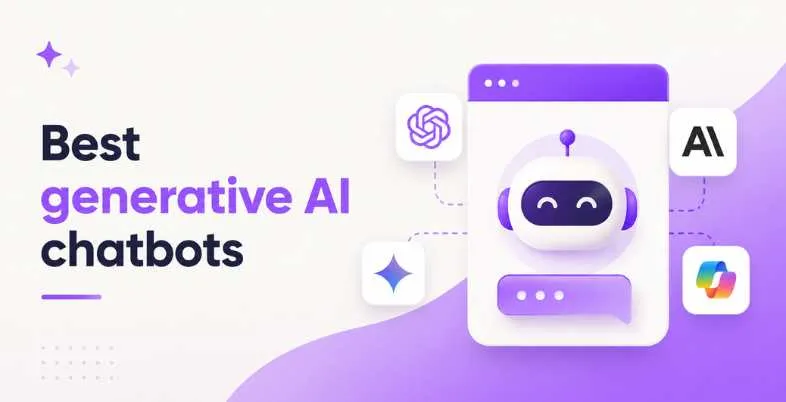
AI conversations are the golden age of today. By 2026, the most successful generative AI chatbots won’t be simply playthings, but the companion of writers, developers, researchers, marketers and businesses of all sizes. Whether crafting sophisticated emails in mere seconds or troubleshooting intricate code, creating images, or examining 200-page reports, these AI-powered systems are indispensable.
However, with the overwhelming number of options available in the market, it can be quite overwhelming to select the right one among ChatGPT, Claude, Gemini, Copilot, Grok, Perplexity and many more. This is a guide to cut the noise.
We’ve side by side tested, compared and ranked the best generative AI Chatbots of 2026 for you to select the best one for your needs without wasting your time or money.
What Are Generative AI Chatbots?
Generative AI chatbots are AI programs that leverage large language models (LLMs) to generate text, images, code, and even speech, based on user input. Rather than older bots that followed scripts, these tools will learn from the patterns of huge amounts of data, resulting in original, tailored responses that will be relevant to the context.
Whether it’s answering questions, generating content, analyzing documents, creating code, or something else entirely, AI chatbots are a versatile tool that can be used in numerous different ways. Simply put, they ‘think, create and assist’ all in real time.
How LLMs Power Modern AI Chatbots
- Transformer Architecture: The Transformers architecture, unlike other LLM models which operate on a single word at a time, is a neural network architecture that works on the entire sequence of text.
- Pre-training on Massive Data: Models are trained on billions of words from books, websites and code, providing them with a vast amount of world knowledge.
- Fine-tuning & RLHF: Fine-tuning is done after the basic training, which is fine-tuned by Reinforcement Learning from Human Feedback (RLHF) to ensure the chatbots follow guidelines for helpfulness, safety, and accuracy.
- Context Windows: Text that an LLM processes is contained in a “context window” which is larger if the LLM can process more text from a document or conversation at once.
- Token-Based Generation: As of each word (or sub-word) in the response, the model attempts to predict the next word most likely, while generating the words one by one.
- Multimodal Extensions: Modern LLMs can be trained on multimodal data, enabling them to understand images, audio, video and code.
- Agentic Capabilities: The best chatbots are able to browse the web, write files and execute code with autonomous human interaction in 2026.
Generative AI Chatbot vs Rule-Based Chatbot
- The difference is that understanding: is based on rules, whereas generative AI chatbots understand natural language and context.
- The flexibility: is that when users stray off-topic from a scripted information, the rule-based bot fails; however, the generative bot has the flexibility to get through unexpected questions.
- Learning: Rule Based Systems do not learn on their own, Generative Models are continually updated and retrained.
- Output Quality: Rule-based bots generate template, robotic responses and generative AI generates fluid, nuanced, human responses.
- Use Cases: Rule-based bots are good for narrow FAQ tasks, generative AI is good for complex multi-step reasoning, creative writing and analysis.
- Maintenance: Rule based bots need to be manually updated for each new scenario; on the other hand, generative AI is more adaptive with time.
- Cost at Scale: When the task is simple and repetitive, cost of Rule Based bots may be lower, Generative AI gives much higher ROI for multiple workflows.
How We Evaluated — Our Testing Methodology
- Writing: Response Quality: We used the same questions for each chatbot for all the categories (writing, coding, research, summarization, reasoning).
- We tested image understanding: image generation, audio and video comprehension (if available) in multimodal capabilities.
- Context Window Performance: We gave long documents to the bots, and assessed their ability to remember and use previous context.
- Accuracy & Hallucination Rate: We compared the factual answers to the factual sources and reported on the error rate for each model.
- The response latency: was measured in two conditions (standard free and paid).
- Pricing & Value: We assessed the generosity of the free tier, and the value added paid plans provide.
- Ease of Use: We rated this based on UX, onboarding process and mobile/desktop apps.
- Privacy & Security: We examined all the providers’ privacy and security policies, particularly those of enterprise users.
Master Comparison Table – Best generative AI chatbots 2026
| Name | Model | Best For | Context Window | Multimodal | Free? | Pro Price |
| ChatGPT | GPT-5.4 | All-around use | 1M tokens | Yes (text, image, audio, video) | Yes (limited) | $20/mo |
| Claude | Opus 4.6 / Sonnet 4.6 | Long docs, writing, coding | 200K tokens | Yes (text, image) | Yes | $20/mo |
| Gemini | Gemini 2.5 Pro | Google ecosystem, research | 1M tokens | Yes (text, image, audio, video) | Yes (generous) | $19.99/mo |
| Microsoft Copilot | GPT-5 (Azure) | Microsoft 365, enterprise | 128K tokens | Yes (text, image) | Yes | $30/mo (M365) |
| Perplexity AI | Multiple LLMs | Research, citations | 128K tokens | Yes (text, image) | Yes | $20/mo |
| Grok (xAI) | Grok 4.3 | Real-time X/Twitter data | 256K tokens | Yes (text, image) | Limited | $40/mo (X Premium+) |
| Mistral Le Chat | Mistral Large 3 | Privacy, EU compliance, API | 128K tokens | Yes (text, image) | Yes | $14.99/mo |
| Meta AI | Llama 4 | Social media integration | 128K tokens | Yes (text, image) | Free only | Free |
| GitHub Copilot | GPT-5 / Claude | Code generation, IDE | 128K tokens | Code-focused | No | $10/mo |
| DeepSeek | DeepSeek V4 Pro | Budget, open-source | 128K tokens | Text, code | Yes | Free |
10 Best Generative AI Chatbots in 2026 — Full Ranked List
1. ChatGPT (OpenAI)
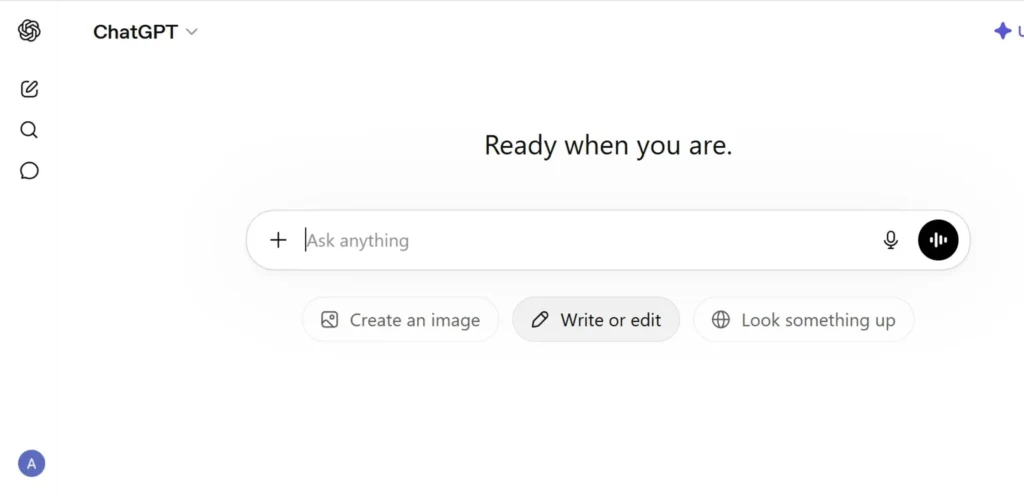
In 2026, ChatGPT will continue to be the reigning champion of the top generative AI chatbots. It runs on the most recent version of GPT: GPT-5.4, which it released in early 2026, and is the most widely-used generative AI on the market, with its proven history of continuous innovation. It has an unprecedented level of custom GPTs, plugins, and integrations, providing unparalleled versatility.
Chats with ChatGPT are now done using GPT-5.2, and the AI has three inference modes (Instant (fast answers), Thinking (step-by-step reasoning), Pro (maximum depth)) and is the most feature-rich platform with Custom GPTs, collaborative editing (Canvas), voice mode, and the largest plugin ecosystem. From students to marketers and developers to enterprise teams, ChatGPT as one of the best trendung app in india has got all the solutions for you.
| Feature | Details |
| Key Features | Custom GPTs, Canvas, Voice Mode, Deep Research, Code Execution, Image Gen (GPT Image 1.5) |
| Pros | Most feature-rich, huge plugin ecosystem, best multimodal support |
| Cons | Can be expensive at higher tiers; occasional accuracy issues |
| Pricing | Free / $5/mo (Go) / $20/mo (Plus) / $100/mo (Promo (Max) |
| Website | chat.openai.com |
2. Claude (Anthropic)
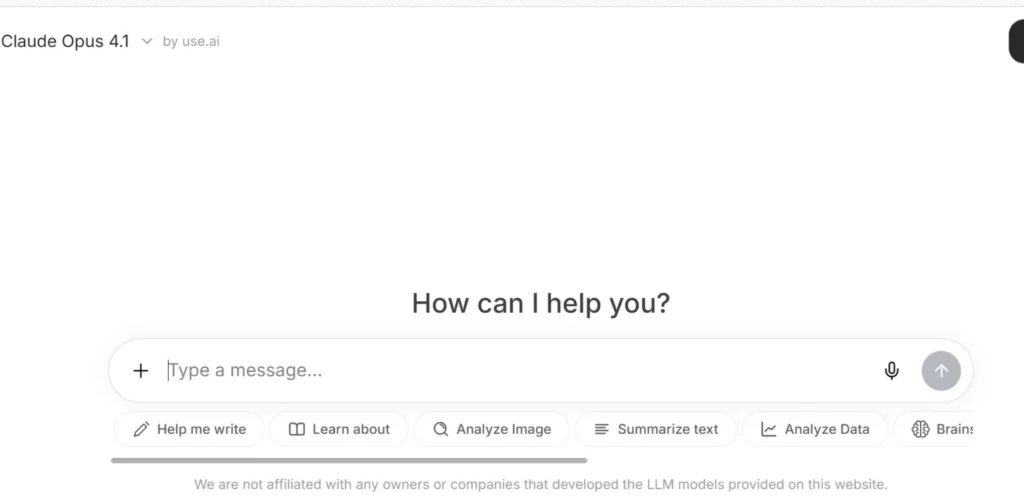
Claude is the most considered and dependable of the best writing, analytical and long documents processing generative AI chatbots. Claude now runs on Opus 4.6 which added agent teams, an AI agent feature that enables multiple AI agents to collaborate on more complex tasks. It is used by professionals who require precision and subtleties rather than speed.
Claude shines in processing large documents and complex text analysis, and can be particularly helpful when reading reports, PDF documents, and research papers. Claude’s 200K token context window, and reputation for careful, honest responses make it the lawyer’s, researcher’s, writer’s, and enterprise teams’ preferred chatbot.
| Feature | Details |
| Key Features | 200K context window, document analysis, agentic tasks, Claude Code, strong coding |
| Pros | Best for long documents, nuanced writing, low hallucination rate |
| Cons | Fewer integrations than ChatGPT; image generation not built-in |
| Pricing | Free / $20/mo (Pro) / $100/mo (Max) / Enterprise custom |
| Website | claude.ai |
3. Google Gemini
For those already in the Google ecosystem, Gemini is Google’s response to the AI chatbot craze and will definitely make a name for itself among the best generative AI chatbots. The all-new Gemini 3 series of releases stole the show in November 2025 and was a great success across the world. Its built-in integration with Gmail, Docs, Drive and Search makes it a productivity powerhouse.
It’s closely connected to Google’s suite of applications, such as Google Drive, Google Docs, and Google Gmail, and is making its way into being the artificial intelligence backbone of numerous Google applications. The free version is very generous, and is perfect for those on a tight budget, or students.
| Feature | Details |
| Key Features | Google Workspace integration, multimodal (text/image/audio/video), Gemini Flash, Deep Research |
| Pros | Generous free tier, best Google app integration, strong multimodal |
| Cons | Less consistent at complex reasoning vs ChatGPT/Claude; data privacy concerns |
| Pricing | Free (Gemini Flash) / $19.99/mo (Advanced) / Workspace Business add-on |
| Website | gemini.google.com |
4. Microsoft Copilot
One of the top generative AI chatbots for business productivity, Microsoft Copilot enhances the capabilities of the Microsoft 365 environment for enterprise work. Copilot applies Microsoft’s sensitivity label system, allowing access to content based on user permission limiting access to confidential information, thereby decreasing the risk for unauthorized users viewing confidential information. It’s a seamless choice for organisations that are already using Office tools.
The approach of Microsoft is not to be the ones to create their own LLM from the ground up, but rather to integrate generative AI into their entire product lineup, typically using OpenAI models, and by 2025, Microsoft said generative AI is used in 85% of Fortune 500 companies on its platforms. Copilot in Word, Excel, PowerPoint and Teams is a real game-changer.
| Feature | Details |
| Key Features | Microsoft 365 native integration, Word/Excel/PPT/Teams AI, Azure security |
| Pros | Deep Office integration, enterprise security, easy adoption for M365 users |
| Cons | Less useful outside Microsoft ecosystem; pricier for individual users |
| Pricing | Free (basic) / $30/mo (M365 Copilot) / Enterprise custom |
| Website | copilot.microsoft.com |
5. Perplexity AI
The research specialist of the best generative AI chatbots, Perplexity AI can answer your questions and tell you where they are coming from. What sets Perplexity AI apart is that it does not function in the typical manner of a chatbot.Unlike most chatbots, Perplexity AI operates more like an AI search engine. It typically provides sources and citations where applicable, making it extremely useful for research, as well as providing answers. It’s the answer source journalists, academics and analysts rely on for answers that are based on facts.
The one thing that makes Perplexity stand apart from other compare-and-contrast tools: it displays how it got each answer. There is no direct competitor for researchers, journalists or anyone else who needs factual answers. Its Pro version is for those who want to access several underlying models as well as unlimited deep research.
| Feature | Details |
| Key Features | Live web search, source citations, multi-model routing, Deep Research mode |
| Pros | Best for verified, cited answers; excellent for academic and news research |
| Cons | Less creative than GPT/Claude; not ideal for long-form writing |
| Pricing | Free / $20/mo (Pro) / $200/mo (Max, multi-model) |
| Website | perplexity.ai |
6. Grok (xAI)
Grok is the most assertive of all the best AI chatbots, created by Elon Musk’s xAI that’s natively embedded in the X (formerly Twitter) platform. Unlike other software, Grok is irreverent and can gain access to real-time data from X. The model features a unique personality, with the aim of making it more breathable than its rivals. It’s the only major chatbot that has authentic real time social media intelligence.
Grok is the only AI that can access X (Twitter) data in real-time, which makes it best suited for examining current events and analyzing social media. The Premium+ plan includes X premium features in addition to the AI features, including Aurora image generation. When the latest trends and social chatter are of the utmost interest, then Grok is unbeatable.
| Feature | Details |
| Key Features | Real-time X/Twitter data, Aurora image gen, conversational personality, Grok 4.3 |
| Pros | Uniquely real-time; great for social media & news; entertaining to use |
| Cons | Most expensive standalone plan; limited ecosystem outside X |
| Pricing | Free (limited) / $8/mo (X Premium) / $40/mo (X Premium+) / $30/mo (Grok Business) |
| Website | grok.com |
7. Mistral Le Chat
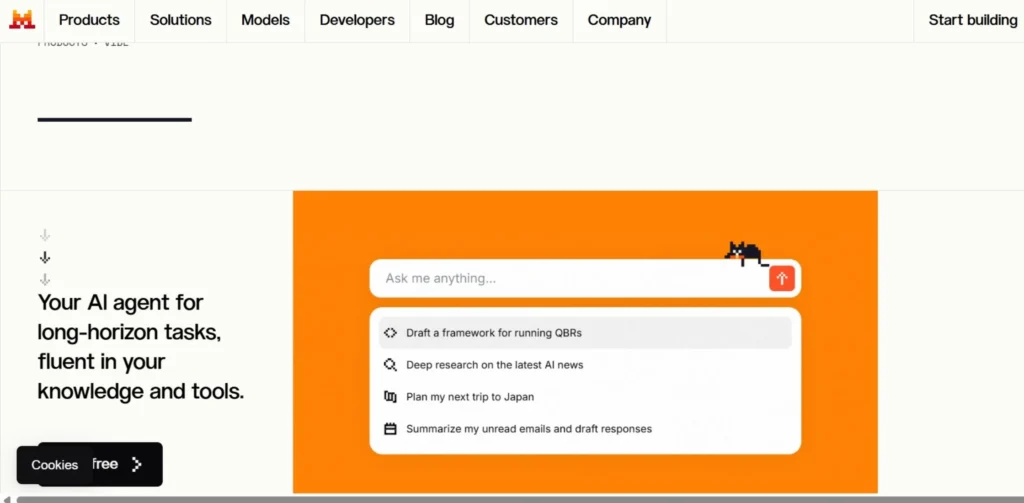
Mistral Le Chat is the privacy-first contender from Europe, and the most cost-effective paid option from a reputable AI lab, among the top generative AI chatbots. At $14.99/month, Mistral’s Le Chat Pro is the only provider to have a student discount, with the standard price being $20/month. Mistral is a favourite of developers and privacy-minded companies for its open-weight models and EU data residency.
Mistral AI is the leader in open-weight model development, is EU privacy & compliance oriented and has a fast, responsive interface with Le Chat, although has fewer integrations than its U.S. counterparts. Mistral is an excellent option for teams that prioritize data sovereignty and cost-effectiveness while still enjoying powerful AI capabilities.
| Feature | Details |
| Key Features | EU data residency, open-source models, Le Chat interface, Vibe coding tool, Canvas |
| Pros | Most affordable paid tier; best for EU compliance; open API access |
| Cons | Smaller ecosystem; less brand recognition; weaker creative generation |
| Pricing | Free / $14.99/mo (Pro) / $24.99/user/mo (Team) / Enterprise custom |
| Website | chat.mistral.ai |
8. Meta AI
Meta AI is the most broadly available addition to this collection of the top generative AI chatbots, and the only one that is 100% free without any paid tiers. Meta AI’s best use case is when users leverage AI while in their own social messaging apps. It is integrated into Meta’s social media platforms, such as WhatsApp, Instagram, Facebook and Messenger, and has 3 billion+ total users. It’s powered by the Llama 4 model, making AI a part of the apps that people use on a day-to-day basis.
Meta AI is not as comprehensive as ChatGPT or Claude, but its ubiquity and free accessibility are more game-changers. It is the smoothest AI experience in any app anywhere in 2026, for billions of users who rely on WhatsApp and Instagram for their day-to-day needs, where they want to write or need quick answers, or image help.
| Feature | Details |
| Key Features | WhatsApp/Instagram/Messenger integration, Llama 4, image understanding |
| Pros | Completely free, massive reach, easy access in existing apps |
| Cons | No file uploads, no code execution, no web interface, no paid tier for power users |
| Pricing | Free only |
| Website | meta.ai |
9. GitHub Copilot
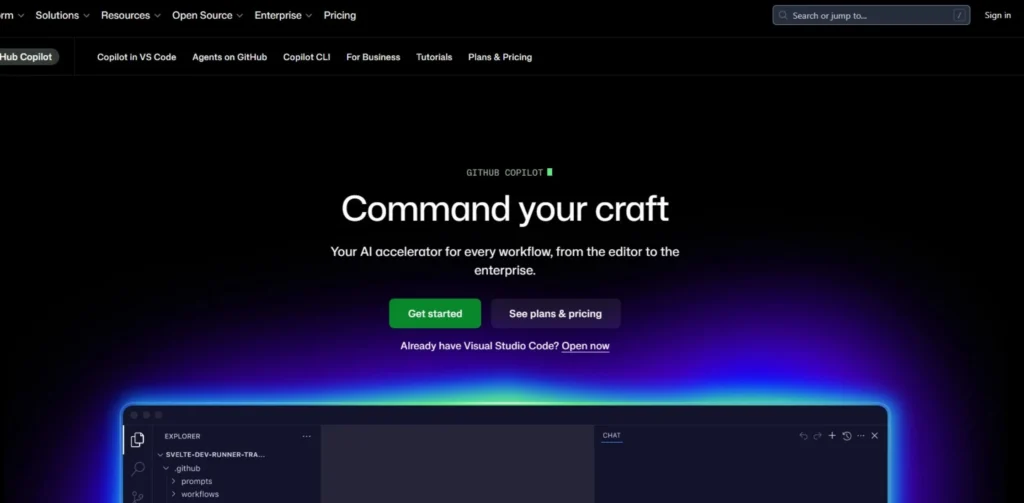
Among the best generative AI chatbots, specifically for software developers and coding teams, is GitHub Copilot. GitHub Copilot Pro is the most cost-effective premium coding AI, at $10/month, it provides unlimited completions, a coding agent, and 300 premium requests, making it the top option for coding. It resides directly within your IDE (VS Code, JetBrains and others), and thus is a natural component of the development process.
Depending on your plan, GitHub Copilot uses a variety of underlying models, such as GPT-5 and Claude Opus 4. It auto-completes code, explains code functions, writes tests, reviews pull requests and even helps onboard new developers. It’s a must-have for any professional developer in 2026.
| Feature | Details |
| Key Features | IDE integration (VS Code, JetBrains), code completion, PR reviews, coding agent, multi-model |
| Pros | Most cost-effective coding AI; seamless developer workflow; supports multiple models |
| Cons | Not useful for non-coding tasks; limited outside the dev environment |
| Pricing | Free (limited) / $10/mo (Pro) / $39/mo (Pro+, all models) / Enterprise custom |
| Website | github.com/features/copilot |
10. DeepSeek
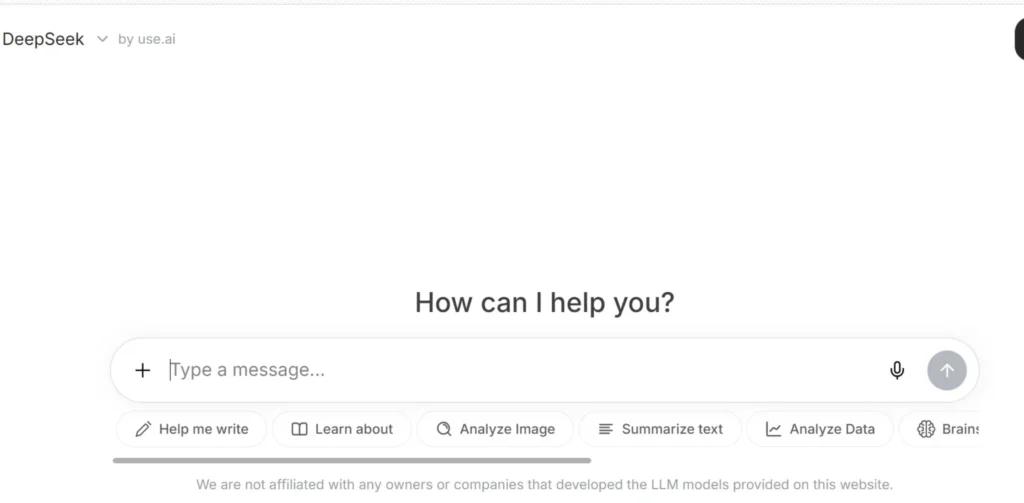
Next on the list of best generative AI chatbots is DeepSeek, which is the most powerful open source chatbot that performs almost as well as a paid one but comes at negligible cost. As one of the top models monitored by the leading AI vendors in 2026, DeepSeek V4 Pro became extremely popular amongst developers, researchers and cost-sensitive businesses globally since it became available for free.
DeepSeek excels at reasoning, mathematical and coding tasks. It is an open source tool that can be optionally deployed locally or customized for specific applications. It isn’t as polished an ecosystem as ChatGPT or Gemini, but when it comes to the ability-to-cost ratio, it’s second to none in 2026.
| Feature | Details |
| Key Features | Open-source, strong reasoning and math, coding proficiency, API access |
| Pros | Completely free; open-source; surprisingly strong at technical tasks |
| Cons | Privacy concerns (data stored in China); limited integrations; no voice/image gen |
| Pricing | Free / API pay-as-you-go (very low cost) |
| Website | deepseek.com |
Best AI Chatbots by Use Case
Best for Coding & Developers
Additionally, ChatGPT Plus has custom GPTs, Claude Pro for in-depth debugging, and Copilot for seamless integration with Visual Studio, providing superb coding solutions. While most developers use GitHub Copilot as the standard utility for daily development in the IDE, Claude is the go-to tool for understanding and refactoring extensive code bases, with its massive context window, and ChatGPT is the architect and creative thinker when it comes to overall planning and problem-solving. For coding jobs, it’s the best free solution, DeepSeek.
Top Picks: GitHub Copilot, Claude, ChatGPT, DeepSeek
Best for Writing & Content Creation
ChatGPT excels at fluid and creative writing, while Claude shines at critical analysis and editing long texts. For blog posts, marketing copy, social content, and storytelling, ChatGPT’s natural conversational style is hard to beat. Claude is superior for editing, refining, and producing long-form professional documents. Mistral Le Chat is an underrated pick for structured, precise writing.
Top Picks: ChatGPT, Claude, Mistral Le Chat
Best for Research & Analysis
The models’ strengths lie in their capacity for fluent, creative writing for ChatGPT and their capacity for critical analysis and editing of long texts for Claude. ChatGPT’s natural conversational tone can’t be beat for blog posts, marketing copy, social media and storytelling. Claude excels in editing, refining and creating professional long-form documents. Mistral Le Chat is an overlooked alternative for concise and to-the-point writing.
Top Picks: Perplexity AI, Gemini, Claude
Best for Customer Support Automation
The winner here is definitely Perplexity AI, which navigates the live internet, displays the source, and organizes responses into appropriate academic, journalistic or business usage. Google Search integration and Deep Research keeps Gemini as a good second best. Perplexity Pro queries through several frontiers models, which is the only $20-tier service which doesn’t rely on any particular provider’s ecosystem.
Top Picks: Claude (API), ChatGPT (API), Microsoft Copilot Studio
Best Free AI Chatbot
Free tiers have undergone tremendous improvement in 2026. Google Gemini is the leading free AI chatbot available — Google provides an abundance of free access to the chatbots, such as the multimodal and web search version, Google Gemini Flash. Meta AI is also 100% free and is accessible to billions via WhatsApp and Instagram. The free versions of DeepSeek and Claude provide noticeably robust technical features, whereas ChatGPT and Claude’s free versions possess decent free features with some daily limits.
Top Picks: Gemini (free tier), Meta AI, Claude (free), DeepSeek
Multimodal Capabilities Comparison
| Chatbot | Text | Images (Input) | Image Generation | Audio | Video | Code Exec | Web Search |
| ChatGPT | Yes | Yes | Yes (GPT Image 1.5) | Yes | Yes (Sora) | Yes | Yes |
| Claude | Yes | Yes | No | No | No | Yes | Yes |
| Gemini | Yes | Yes | Yes | Yes | Yes | Yes | Yes |
| Microsoft Copilot | Yes | Yes | Yes (DALL-E) | Yes | No | Yes | Yes |
| Perplexity | Yes | Yes | No | No | No | No | Yes |
| Grok | Yes | Yes | Yes (Aurora) | No | No | Yes | Yes |
| Mistral Le Chat | Yes | Yes | Yes | No | No | Yes | Yes |
| Meta AI | Yes | Yes | Yes | No | No | No | Yes |
| GitHub Copilot | Yes | No | No | No | No | Yes | Yes |
| DeepSeek | Yes | Yes | No | No | No | Yes | Yes |
AI Chatbot Pricing Guide (2026)
Free Plans Compared
| Chatbot | Free Tier Includes | Limits |
| Gemini | Flash model, web search, image input, Google Workspace lite | Daily message limits |
| Claude | Sonnet model, file uploads, web search | Daily message cap |
| ChatGPT | GPT-5 (limited), basic tools | Limited messages/day |
| Meta AI | Full access via WhatsApp/Instagram | No file uploads or code exec |
| DeepSeek | Full V4 model access, API | Rate limits on API |
| Perplexity | Web search, basic AI answers | Limited Pro searches |
| Mistral Le Chat | Le Chat interface, web search, image gen | Usage caps on flash answers |
| Grok | Very limited access | Requires X Premium for meaningful use |
Pro/Plus Tiers
- ChatGPT Plus — $20/month: With voice mode, image generation, deep research capabilities and code execution.
- Better long-form writing and more accurate code generation than ChatGPT: Claude Pro — $20/month has a 200K context window, compared to ChatGPT’s 128K.
- Gemini Advanced — $19.99/month: The use of Gemini 2.5 Pro, 1M context window, improved Google Workspace functionalities, Deep Research.
- Perplexity Pro — $20/month: Unlimited Pro searches, multiple underlying models and deep search mode.
- Mistral Le Chat Pro ($14.99/month)– The cheapest paid Mistral AI plan, also available at a student discount not offered by any other.
- Grok (X Premium+) — $40/month: Full version of Grok with Aurora image generation, real-time X data and premium features of X platform.
- GitHub Copilot Pro — $10/month: Most suitable for developers, unlimited code completions, agentic coding and 300 premium model requests.
- ChatGPT Pro / Claude Max — $100/month: The best service for power users who require the deepest answers, priority access, and maximum usage.
Enterprise & API Pricing
- OpenAI API: GPT-5.4 charges by the million tokens (input and output) and can be customized for Enterprise with SLAs, data privacy and dedicated infrastructure.
- Anthropic API : Claude Opus 4.8 & Claude Sonnet 4.6: Claude Opus 4.8 and Claude Sonnet 4.6 can be used via API with pay-as-you-go token pricing, which is competitive with OpenAI’s.
- Google Vertex AI (Gemini): Gemini models can be made available on Google Cloud’s Vertex AI platform in enterprise billing, usage-based pricing and VPC controls.
- Enterprises:can use GPT-5 and Copilot features with Azure OpenAI Service, with Microsoft’s compliance, data residency and security guarantees.
- Perplexity Max — $200/month: The one that offers access to multiple frontier models (GPT, Claude, Gemini) for enterprise users, as opposed to forcing them to choose one provider.
- GitHub Copilot Enterprise — Custom: Organisational-wide deployment with codebase indexing, security controls and priority support.
- For European companies: with a need for GDPR compliant AI that can be deployed on-premise or via the private cloud, Mistral Enterprise offers custom pricing.
Privacy & Data Security for Enterprise AI Chatbots
- Data Training Opt-outs: Most large data providers (Anthropic, OpenAI, Google, Microsoft) have options for enterprise customers to opt-out of participation when having conversations to train future models.
- End-to-End Encryption: Enterprise tiers for Claude and Microsoft Copilot have data in transit and at rest encryption with customer-managed keys.
- Data Residency: Microsoft Copilot enforces sensitivity labels, and restricts access to the content, according to user permissions; it’s one of the most powerful enterprise security options.
- For businesses: within the EU, GDPR-compliance is a top priority, and Mistral AI’s architecture is GDPR-ready, while its data storage options are in the EU.
- All of ChatGPT Enterprise: Claude Enterprise, and Gemini for Workspace are SOC 2 Type II and ISO 27001 certified.
- Although DeepSeek: is a strong tool, some enterprises, particularly in regulated sectors or government bodies, may have concerns about it storing data on Chinese servers.
- No Data Retention (ZDR): With Zero Data Retention (ZDR), no data is logged or stored after a session with Anthropic’s API (and some OpenAI tiers).
- Role-Based Access Controls: Enterprise solutions from all the major players offer SSO, RBAC and audit logging features to help IT governance and compliance teams.
AI Chatbot Trends to Watch in 2026–2027
- By 2026: generative AI services will no longer be competing on just text generation; they will be competing for providing capabilities that can be used by an “AI agent” to autonomously complete complex tasks.
- Multi-Agent Collaboration: Claude’s new capability to work in an agent team, where multiple AI agents work together to accomplish a complex task is a glimpse into the future of the industry as a whole.
- As of today: ChatGPT and Gemini are both capable of 1 million token context windows, and frontier models should have 10M+ by 2027.
- Voice AI Becomes Conversational: Real-time, natural voice interaction (beyond speech-to-text) is quickly emerging as a major advancement, and ChatGPT’s voice mode is at the forefront.
- On-Device AI: Smaller, faster models (Mistral and Llama variants) are becoming popular to be powered by on-device AI, without needing a cloud service, and with maximum privacy.
- From tools to personalized assistants: AI chatbots are becoming increasingly adept at user preference, tone, and working style, learning across sessions.Personalization at Scale: AI chatbots are learning user preferences, tone and working style over time, from tools to true personalized assistants.
- Regulation & Compliance Tightening: New EU AI Act and proposed US AI Governance structure puts pressure on providers to document AI model capabilities, risks and training data in a more transparent manner.
- AI + Search Convergence: AI Chatbots and search engines are converging, with Perplexity, Gemini and ChatGPT evolving into answer engines.The convergence of AI Chatbots and search engines is blurring lines, with answer engines like Perplexity, Gemini, and ChatGPT dominating the landscape.
Conclusion
It’s never been more exciting — or more competitive — to be a part of the world of best generative AI chatbots. There is no one best chatbot in 2026. ChatGPT has taken over the world by storm for its versatility and depth of the ecosystem, Claude is best known for its ability to analyze content thoughtfully and handle long, lengthy documents, Gemini for its integration with Google and its generous free tier, and Copilot for its ability to integrate with Microsoft’s enterprise workflows.
Perplexity has the research capabilities, Grok has social intelligence in real-time, and GitHub Copilot has developer productivity covered. There is no one “right” answer – it’s all dependent upon your goals, budget and current tools. Leverage the free tiers to start with, experiment with real world work and only upgrade when you hit the ceiling. As of 2026, the top generative AI chatbots are already available for use, you just need to discover which one is perfect for you.
Explore These:
FAQs — Generative AI Chatbots
Which would be the best Generative AI Chatbot in 2026?
While ChatGPT is the most all-rounder, Claude is popular for writing and analysis, and Gemini is the best option for Google Workspace users. “best” is subjective based on how you are using it.
What are some of the best free AI chatbots for 2026?
Yes: Gemini’s free tier supports multimodal, and includes web search, no cost whatsoever. Other models that have great free plans are Claude, ChatGPT, Perplexity, Meta AI, and DeepSeek.
So what chatbot is the best for coding and developers?
The best value for pure IDE coding is currently available with GitHub Copilot at $10/month. Claude Pro is great for comprehending and optimizing huge code bases. Architectural planning is an excellent use of ChatGPT Plus.
Can AI Chatbots be trusted with sensitive business information?
ChatGPT Enterprise, Claude Enterprise, Microsoft Copilot and Gemini for Workspace all have advanced security measures such as data encryption, SOC 2 certification, and opt-out from model training for enterprise use. Please read your provider’s data policy.
What is the difference between a rule-based chatbot and generative AI chatbot?
While rule-based chatbots have a set of responses that are preprogrammed, generative AI chatbots leverage large language models to generate dynamic, context-aware responses. Generative bots are more flexible, more capable, and more natural sounding – but they also need more computing power and supervision.